
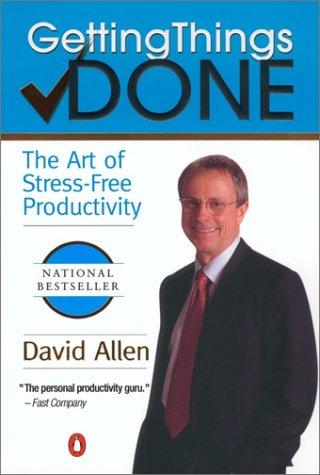
Getting Things Done by David Allen - The Book That Started It All
If I were to trace the origins of my productivity journey back to one key moment, it would be the day I was given Getting Things Done by David Allen to read. What seemed like just another time management book turned out to be the framework for a completely different way of working - and thinking.
At its core, Getting Things Done (often simply called GTD) is built on a deceptively simple idea: Your mind is for having ideas, not for holding them. That concept alone stopped me in my tracks (and the year long process of unlearning to relearn began). Like many people, I had been conditioned to use my mind to hold information - you know as we grew up learning how to study for exams my memorising things, learning “memory” techniques and skills.
I was operating with a mind full of open loops - unfinished tasks, half-baked ideas, things I might do someday, all rattling around with no clear system to manage them. And while I didn’t realise it at the time, that mental clutter was exhausting me and stopping me from having the clarity I needed to perform at my best.
David Allen provides a framework that not only helps you capture and organise all the inputs life throws at you but also clarifies what to do with them. Some of the key takeaways that shaped my approach include:
- Capture Everything: Get it all out of your head. Every task, idea, or commitment. Move it into a trusted external system. Whether it’s a notebook, app, or task manager, the relief of simply not having to remember everything is real.
- Clarify and Organise: Don’t just capture…..decide. Is this actionable? What’s the next action? Focusing on defining the very next action creates momentum and eliminates procrastination.
- The Two-Minute Rule: If something will take less than two minutes, do it now. This one rule alone transformed how I handle small tasks and reduced the invisible backlog of tiny to-dos that quietly drain energy.
- Context-Based Lists: Not every task can or should be done right now. Allen introduces the idea of organizing tasks by context - @Phone, @Computer, @Office, @Errands, which helps you match tasks to the right time and place, increasing efficiency.
- The Weekly Review: Arguably the most powerful habit in the GTD system (now I have a weekly preview as well). Taking time each week to review your commitments, projects, and next actions keeps your system trusted and your mind clear. This is where reflection meets planning, and it became a non-negotiable ritual in my own workflow (well to be honest - mostly!)
Now, here’s where I’ll be really honest…..I don’t actually recommend reading the book. I’m an avid reader, and even I found it hard going and quite dry (though you might feel differently!). But I do mention it here because it’s a powerful prompt to start thinking differently about productivity and how it links directly to Hauora (wellbeing) and reducing that constant feeling of never having enough time.
For me, GTD wasn’t just about getting more done; it was about freeing up mental space, reducing stress, and creating more capacity to focus on what really matters. No matter whether that’s in work, life, or personal wellbeing. That’s the real productivity win.
This book didn’t just introduce me to better task management; it fundamentally changed how I think about work, priorities, and mental space. It paved the way for me to explore more advanced ideas like digital minimalism, the PARA method, and neuroscience-based strategies for focus, but GTD will always be where it started.
If you’re looking for a way to reclaim control, reduce overwhelm, and create space for more meaningful work, start here. And remember: every big project, every life-changing goal, every productivity journey starts with one question - What’s the very next action?
`Lisa